

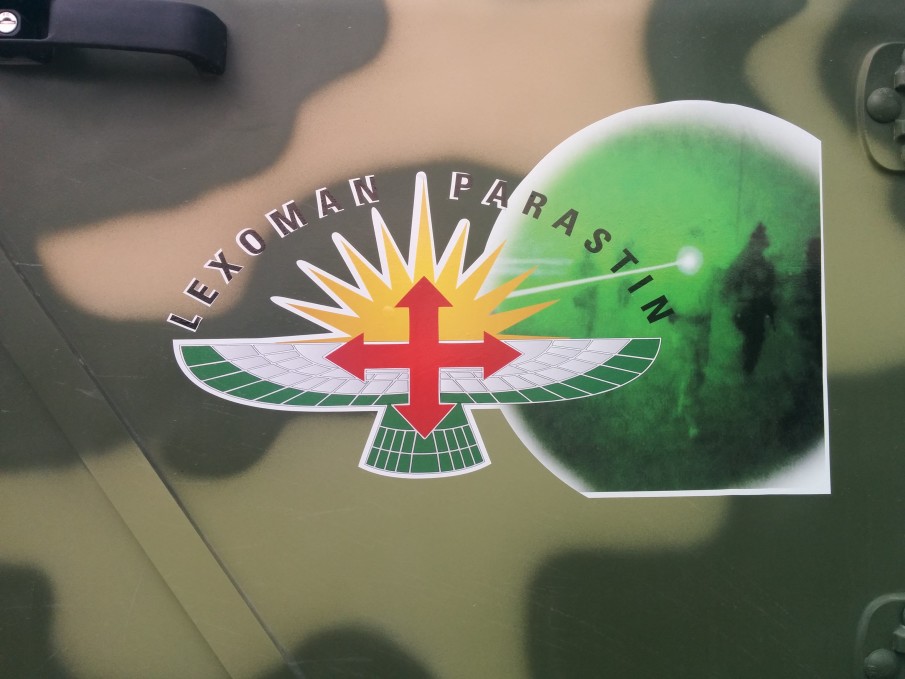
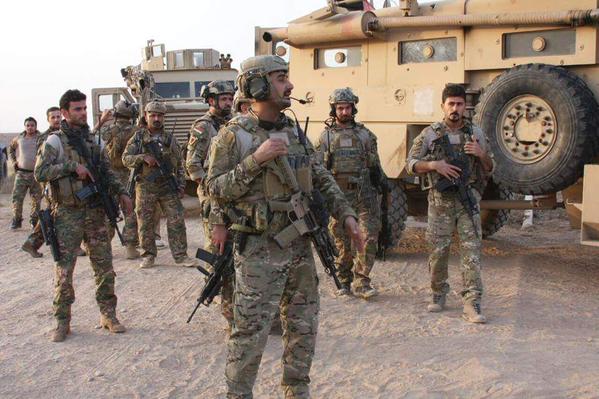
Polad recounted the operation from his office on the CTG compound, where a Delta Force plaque hung on the wall and a .50-caliber Barrett sniper rifle rested on its bipod next to his desk. Behind the desk was a unit picture with their foreign advisors from the United States, Canada, and the U.K. The picture also displayed the CTG motto Lexoman Parastin, which means “Those who give their lives to protect their people.”
“We arrested one of those involved in the kidnapping in Sulaymaniyah,” Polad said. “I told him he could lead us directly to the house in Baghdad where the boy was held or I would shoot him.” The criminal wisely complied with the CTG commander’s directive and told him where the house was: Sadr City. Although operating in the semi-permissive environment of Kirkuk is easy for CTG, a mission taking the Kurdish commandos into Sadr City to execute a hostage rescue mission was unlike anything they had ever faced.
“I loaded my men in civilian vans and drove them to Baghdad,” Polad said, in order to infiltrate closer to the objective area undetected. “Then we drove to the presidential palace and borrowed some Humvees.” Then they drove to Sadr City, a particularly dangerous neighborhood in Baghdad with only one way in or out. The result was a massive firefight. “We had four enemy killed, a bunch of guys injured, and rescued the kid.” One of the CTG operators had brought a bag of candy and chocolate for the boy, knowing he would be scared when they pulled him out of Sadr City. Back at the presidential palace, CTG and the newly liberated hostage flew back to Sulaymaniyah. Several injured CTG operators had to be left at the palace for the time being, as moving them would have resulted in their deaths.
Back in Sulaymaniyah, the boy’s parents were waiting for him. “The look on the mother’s and father’s faces was the best reward you could ever hope for,” Polad recalled.
There was political fallout for the operation, though. The government of Iraq (GOI) scrambled to figure out what had happened in the aftermath of the Sadr City firefight. When they realized the Kurds had conducted an operation in Baghdad, they went ballistic, accusing the Kurdish government of having an out-of-control rogue unit. Polad rebuked any such charge, stating that he sent numerous requests for assistance to the GOI, all of which went unanswered. For the CTG commander, it was important to send a message to Iraq: If you kidnap Kurdish kids, you will have your door explosively breached in the dead of night and your home flooded with heavily armed Kurdish commandos.
Despite such a spectacular success, CTG has had its share of challenges as well. After U.S. troops pulled out of Iraq, Polad’s men came under scrutiny from the Kurdish government, with some politicians calling for the unit to be disbanded because it sucked up so much money. By Polad’s estimation, each of his operators carries around $60,000 worth of weapons and equipment on his person during a mission. Some bureaucrats thought that CTG should just go back to being Peshmerga and carrying 50-year-old Kalashnikovs. Polad was adamant that the Peshmerga, “cannot do what my men can do.” The unit was expensive but brought unique and desperately needed counterterrorism capabilities to the Kurdish government.
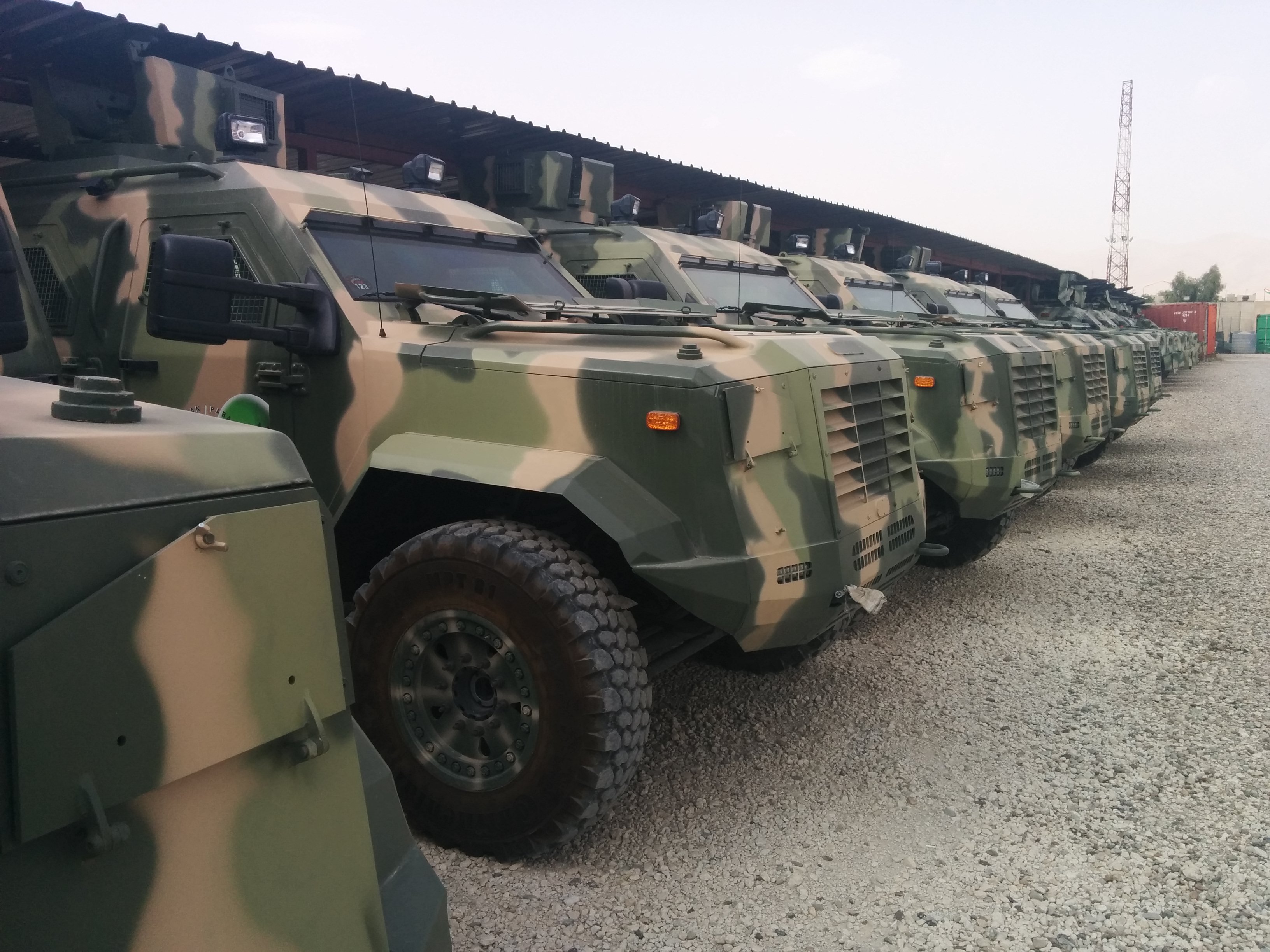
“We all thought that the United States would at least leave a small element behind after the war. Instead, they packed their bags one day and said goodbye,” Polad remembered. He didn’t blame the soldiers, but felt that the decision to pull out of Iraq was premature and was made for political reasons. Without any U.S. assistance, CTG’s rifles and night vision goggles began to break down. Left without help from America, the unit turned to the UAE for the purchase of Guardian armored vehicles, rather than the American-made Humvees.
The fact is, al-Qaeda never really left Iraq, and CTG was at the front lines in a war against Islamic extremists after the U.S. pulled out of the country. Many of the terrorists CTG captured were actually bad guys already in their database because CTG had captured them previously during Operation Iraqi Freedom, only to see them released from prison by the Iraqi government.
All of that changed with the emergence of ISIS.
“I had to change my number four times,” Polad laughed. When ISIS burst onto the scene, he said everyone was calling him asking for things. “Just before you came I was on the phone with a U.S. official. I told him that Americans have to understand that Sunnis and Shias will never get along. They might sit down with Americans when you come here for a meeting and act nice, but once you leave, everything just goes back to the way it was.”
The emergence of ISIS was a game changer for the Peshmerga, and especially CTG. General Ja’afer, who is in the charge of the entire Kirkuk sector, told SOFREP during an interview that ISIS is an even more difficult enemy to fight than Saddam’s army because their only goal is to kill and to die, as opposed to an army that has actual military objectives they want to achieve in pursuit of victory. Although CTG was used to conducting time-sensitive missions to capture or kill high-value targets, the war against ISIS has been a conventional campaign in many ways, with front lines versus the counter-insurgency campaign they fought in the past.
In recent operations against ISIS, CTG has been augmenting the Peshmerga. “If they have six villages to capture, we will take the two most difficult ones,” Polad said. His men have special training and equipment and are experts in urban warfare, so CTG operators will take down those villages unilaterally, taking some pressure off of the Peshmerga.
One such operation included raiding a mosque loaded with ISIS terrorists in Jalula. “On that mission, we killed Chechens, Uzbeks, and even a guy from Hackney,” Polad told SOFREP, referring to a neighborhood in London. Kurdistan’s CTG has participated in nearly every Peshmerga offensive in the south, many around Kirkuk in the area of Abu Lejum. These missions are good for morale, but CTG does not really see them as their primary job, which is counterterrorism. The operators want to go back to hitting high-value targets, including behind enemy lines.
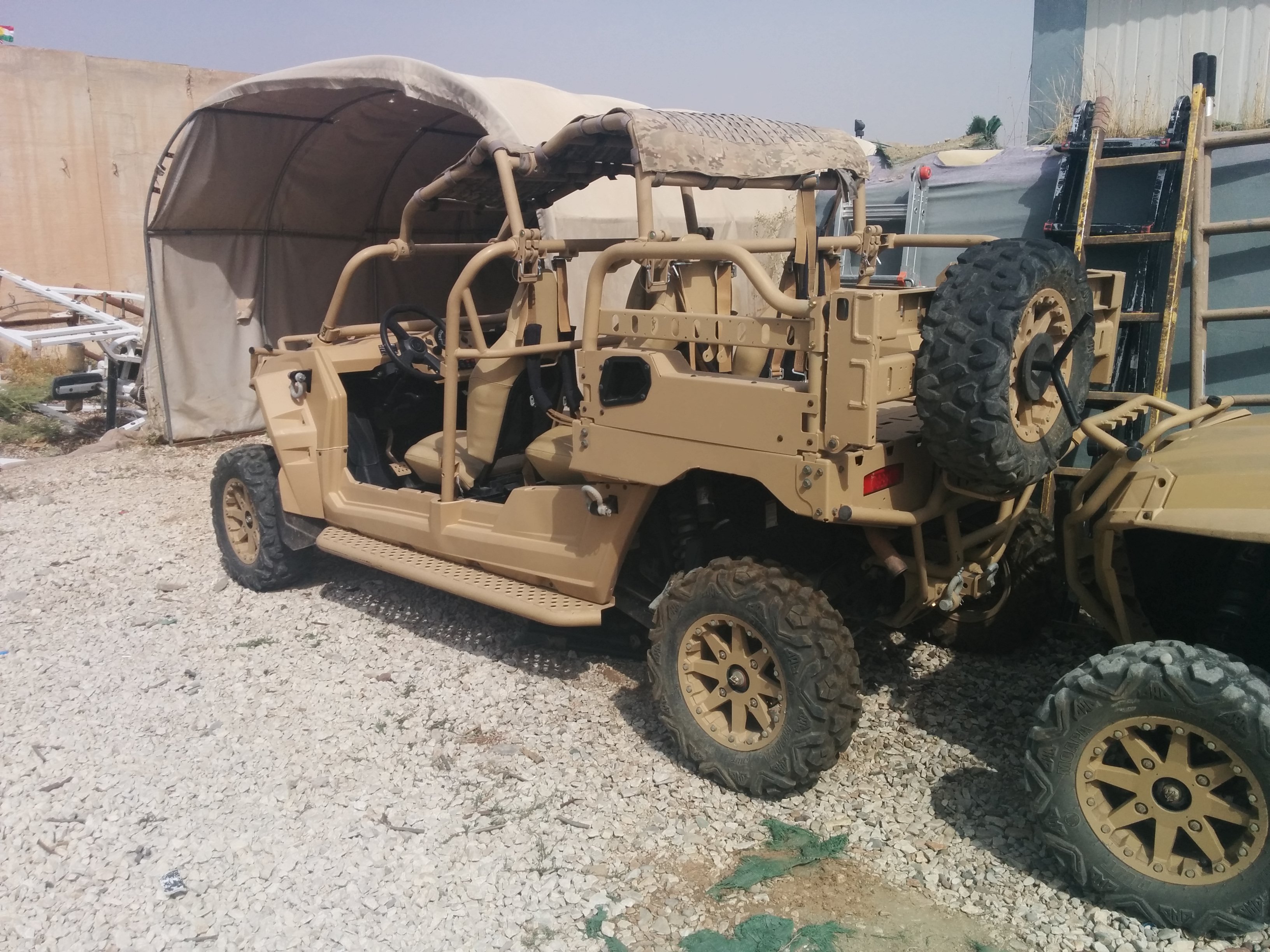
“Our snipers spend months on the front lines,” Polad said. Using Polaris ATVs, sniper teams will infiltrate areas quietly at night and set up a sniper hide. Come dawn, they start whacking ISIS terrorists, killing five to seven of them before abandoning their hide site.
CTG still faces significant hurdles to overcome, including issues that also effect the Peshmerga. One Peshmerga captain on the front lines told SOFREP that he had not been paid in six months. Polad himself told us that he had not been paid in four months. This is an issue that all Kurdish forces are dealing with, the result of the Iraqi government not paying the Kurdistan regional government money that they are owed.
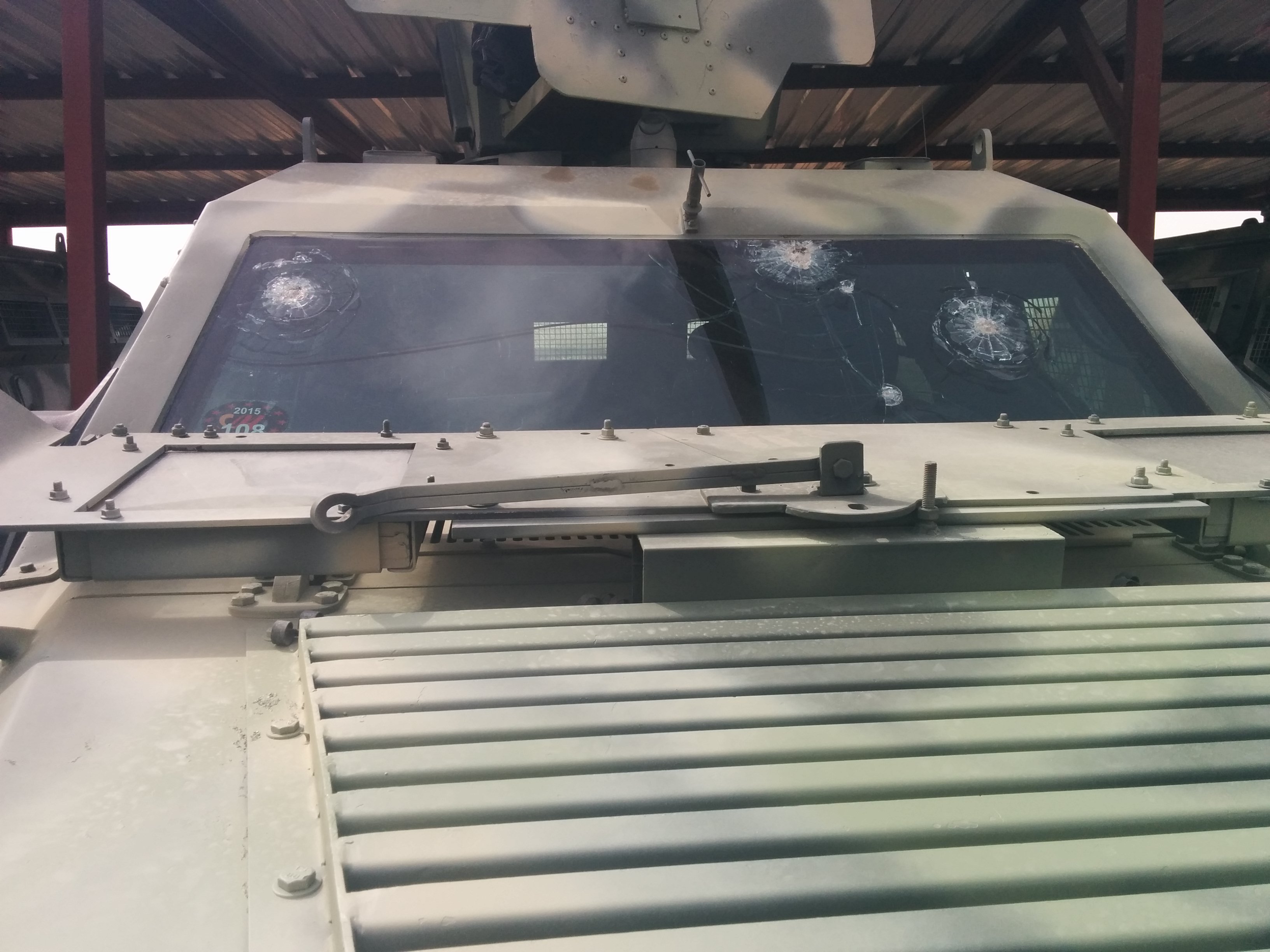
“I’ve lost eight men in a year and a half of fighting,” Polad said. “Four men make for one entire team.” CTG is a small unit and the spider-webbed windows of the unit’s Guardian assault trucks tell a tale of heavy fighting.
Thankfully, the relationship between CTG and coalition special operations units has been rekindled with the war against ISIS. Advisors are back in Kurdistan. Small teams of British SAS and U.S. Special Forces teams are sometimes sent up to the front lines to call in airstrikes on ISIS positions. “I am proud to fight alongside the U.S., to tell you the truth,” Polad told us.
(Featured image: CTG’s unit insignia as it appears on the side of one of their Guardian assault vehicles. The four arrows represent the four corners of Kurdistan, while the rays of sunlight are taken from the Kurdish flag. Below appears wings from the symbol of Zoroastrianism, the indigenous religion of Kurdistan. Above is the unit motto Lexoman Parastin, meaning “Those who give their lives to protect their people.”)








COMMENTS